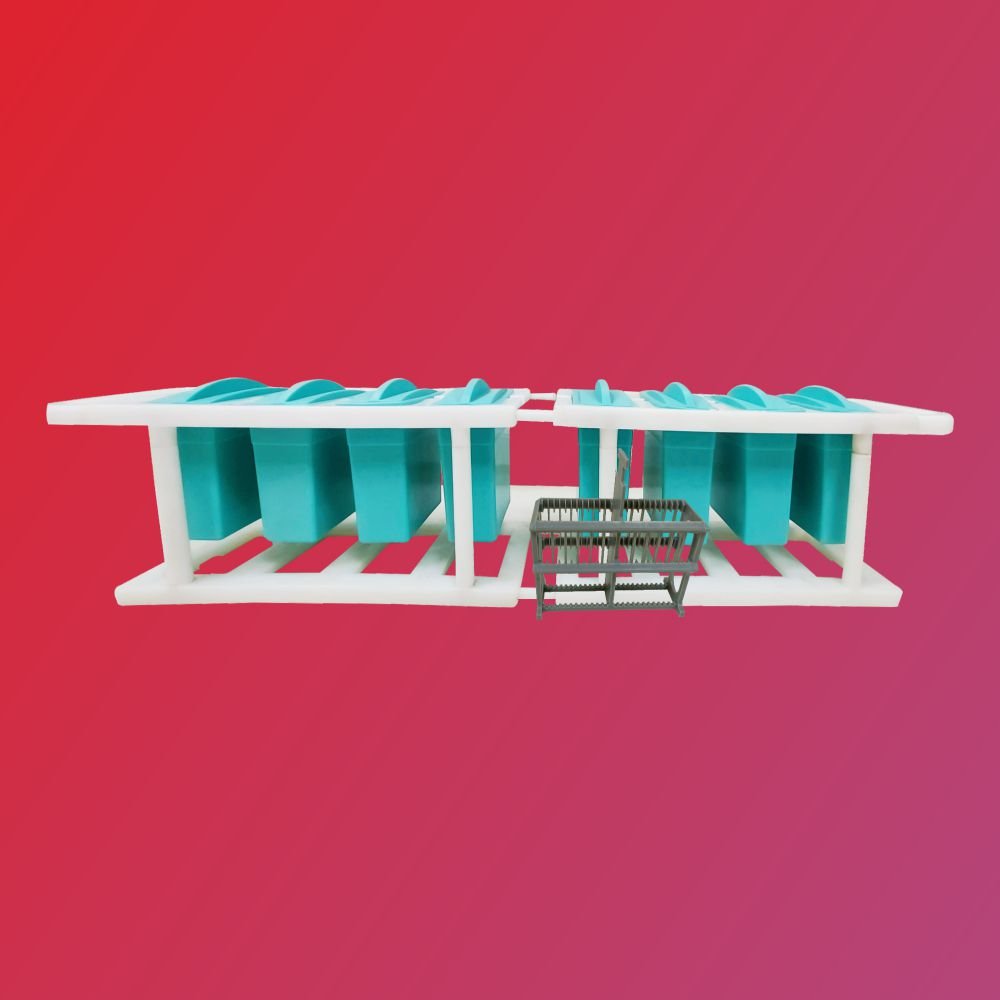
Uniquely designed manual staining station is ideal for high throughput staining(s) like H&E, PAP Stain, Dehydration& Rehydration and all Histology Stains. The jars of the staining station are resistant to xylene and alcohols. Due to the narrowed mouth of jars, it saves up to 60% of reagent usage when compared to conventional glass jars. These high-quality solvent resistant jars hold approx. 250-275 ml of reagent. The station comes with 4 jars with respective lids and solvent resistant slide rack(s) with precise slide holding slots for 24 slides. The staining station is designed to hold the lids at the bottom of each jar to prevent mixing and/or losing them. The unique feature of this stand is that the user can add multiple staining stands to the existing one allowing the user to create their own stand as per the requirement. The linear staining station is compact and can fit in small areas. The durable material used in the frame gives an extra strength and sustains rough handling. It has been designed to save on reagent costs and helps in reducing the cost per slide.
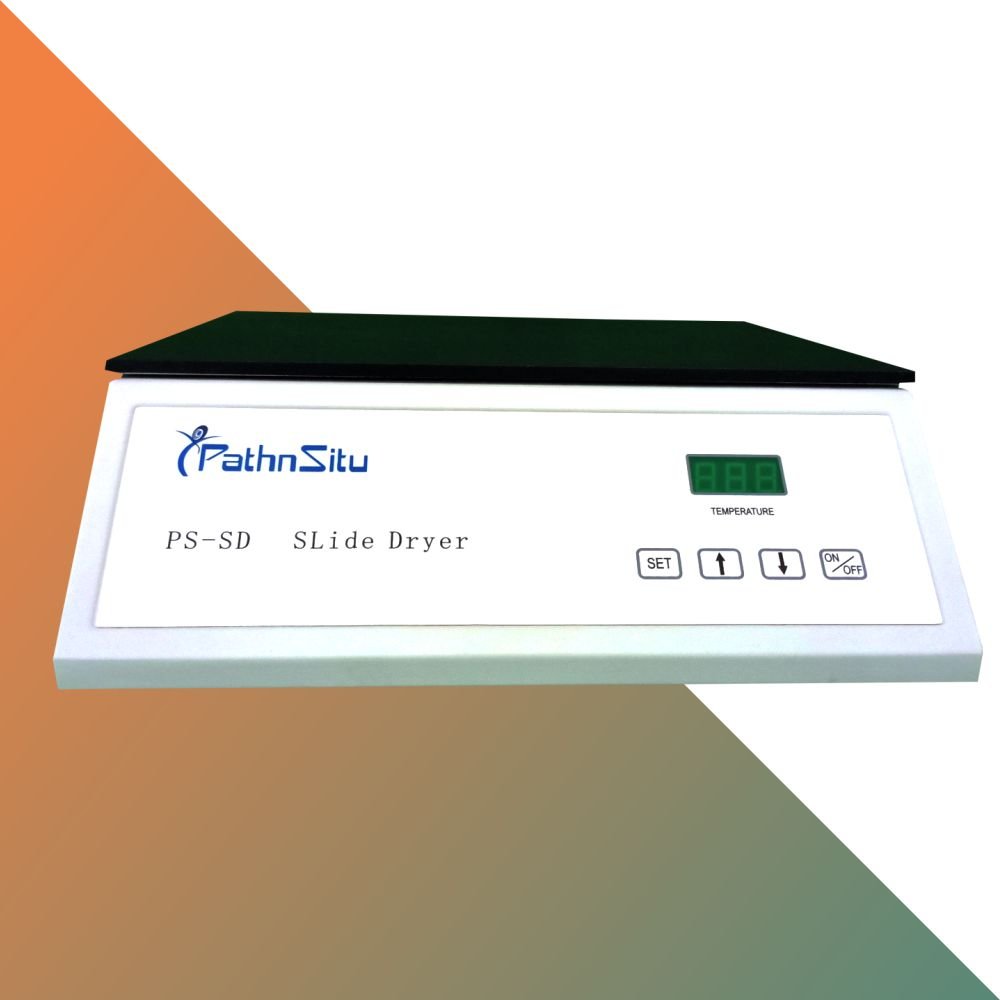
Slide Dryer or Slide warming table is generally used for slide baking. The step of slide baking is where the FFPE tissue slides after the sectioning are baked/heated using dry heat to improve the adhesion of tissue sections to the slide.
FEATURES:
Provides quick heat transmission on the plate surface
Maintains precise and uniform temperature
User friendly set temperature with LED display
Black surface of the plate provides clear visibility of the tissue sections
Wide surface of hotplate can accommodate around 35 slides
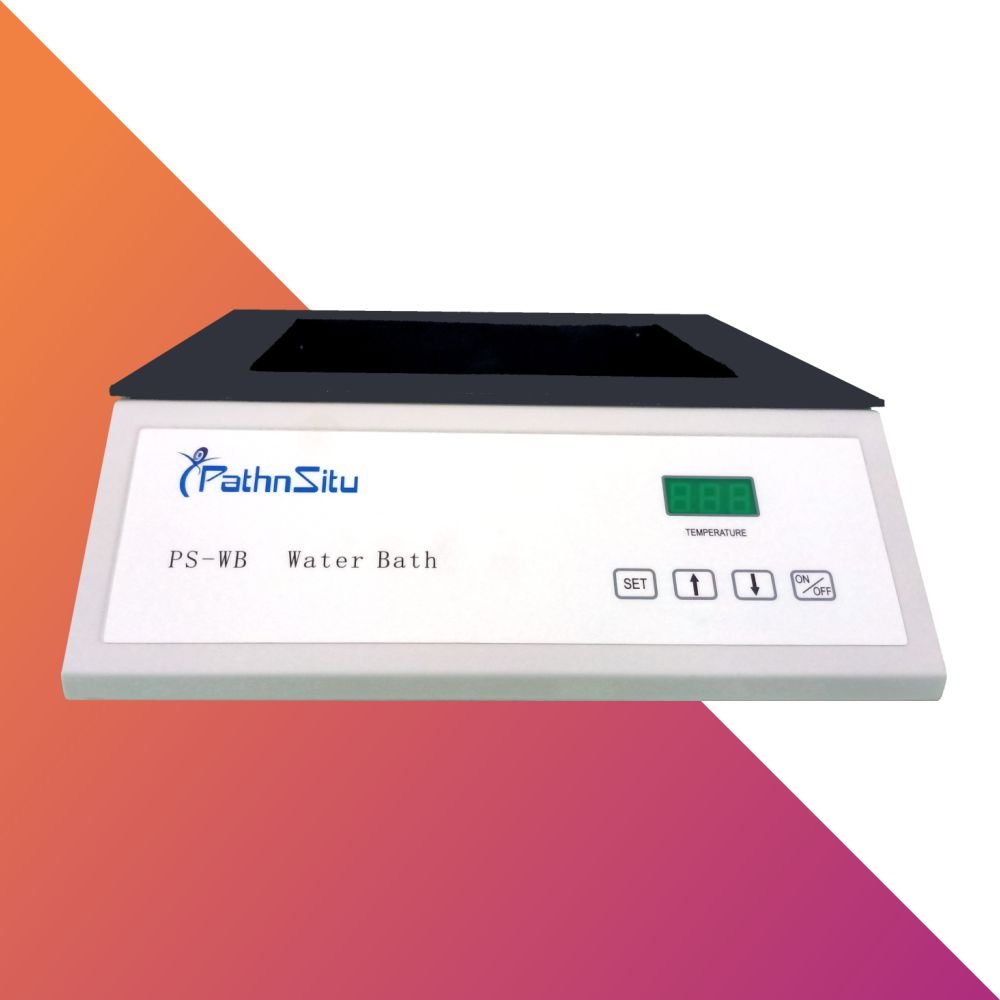
Water bath/Tissue Floatation Bath is an important step after cutting the paraffin sections and before the sections are placed on slides. It allows the tissue section to smoothen out before they are taken on the glass slide. Water bath ensures removal of any wrinkles and folds that are formed before placing them on the slide. The PS-WB Model water bath comprises of a surface that provides quick heat transmission. The temperature can be selected between the room temperature and 90 degrees.
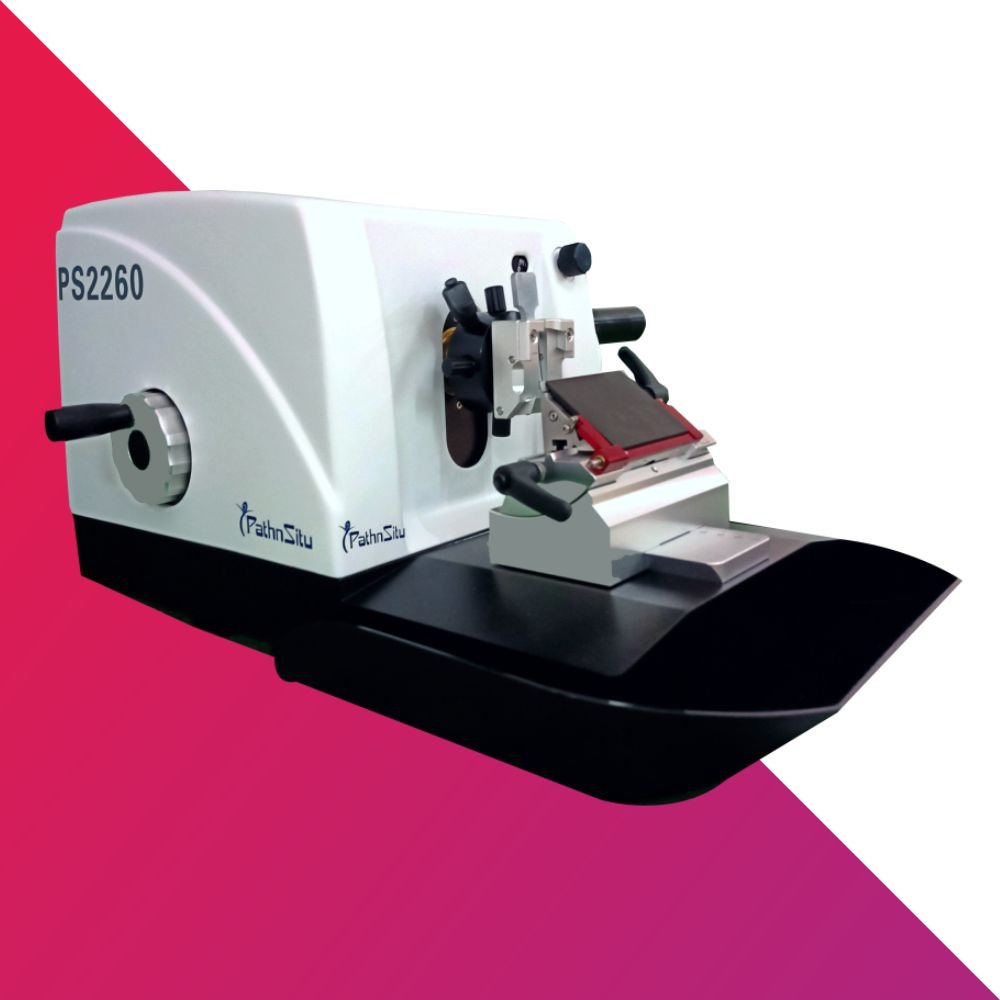
Microtome (PS2260) is a manually operated microtome where tissue sections are cut by turning the handwheel. The guiding lines for the vertical and horizontal movement of the specimens are seamless and free from maintenance. The sections of paraffin embedded block are cut by turning the handwheel. The handwheel should be moved in clockwise direction for tissue block section cutting. The tissue section thickness can be adjusted by a knob (Thickness adjustment knob). Bull's eye Leveller is a unique feature of this microtome which helps the user to check if the clamp is set in the centre. Tissue sectioning is a very important step in histology as any change in the recommended tissue thickness can lead to improper viewing under the microscope.
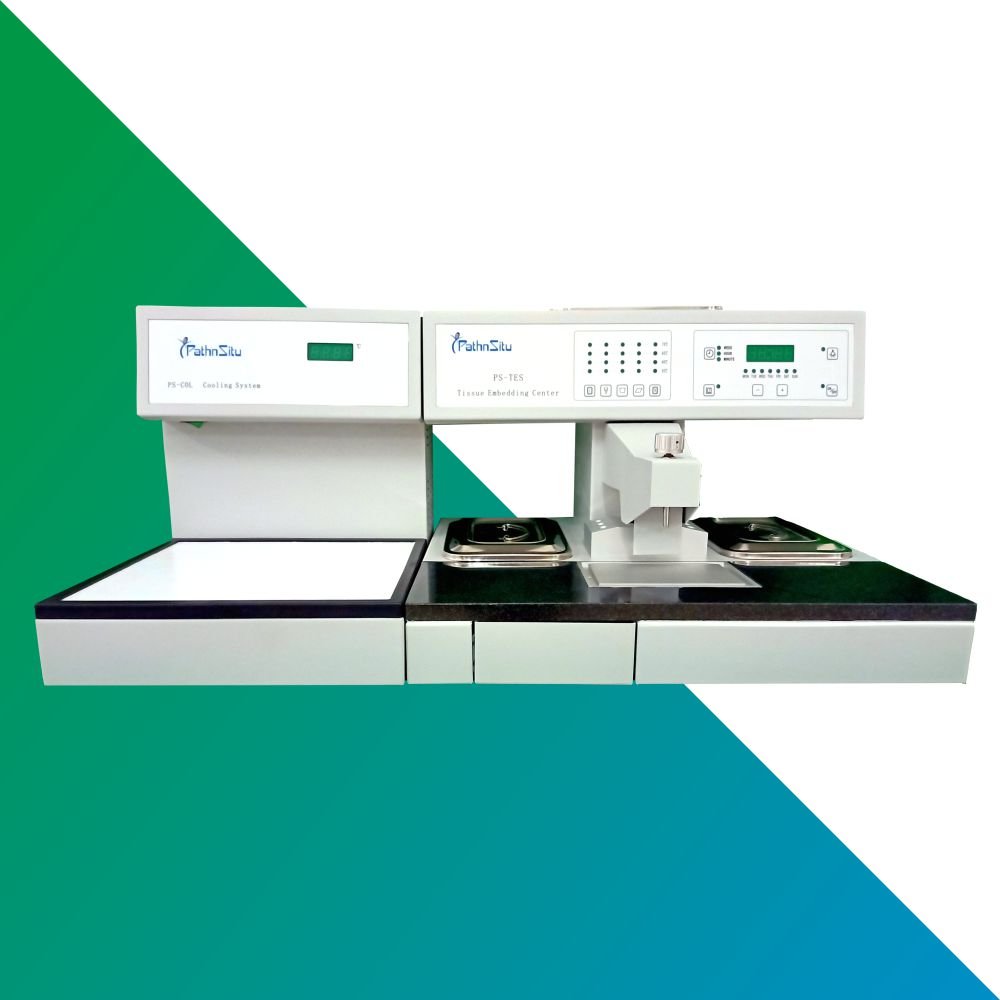
The paraffin embedding is a common technique in histology lab. It is the standard method to prepare tissue paraffin blocks for section cuttings. This procedure is performed using an embedding center in which the tissues are immersed in paraffin wax using molds, it is then cooled to solidify it so that it provides support for tissue section cutting.The paraffin embedding is a common technique in histology lab. It is the standard method to prepare tissue paraffin blocks for section cuttings. This procedure is performed using an embedding center in which the tissues are immersed in paraffin wax using molds, it is then cooled to solidify it so that it provides support for tissue section cutting.
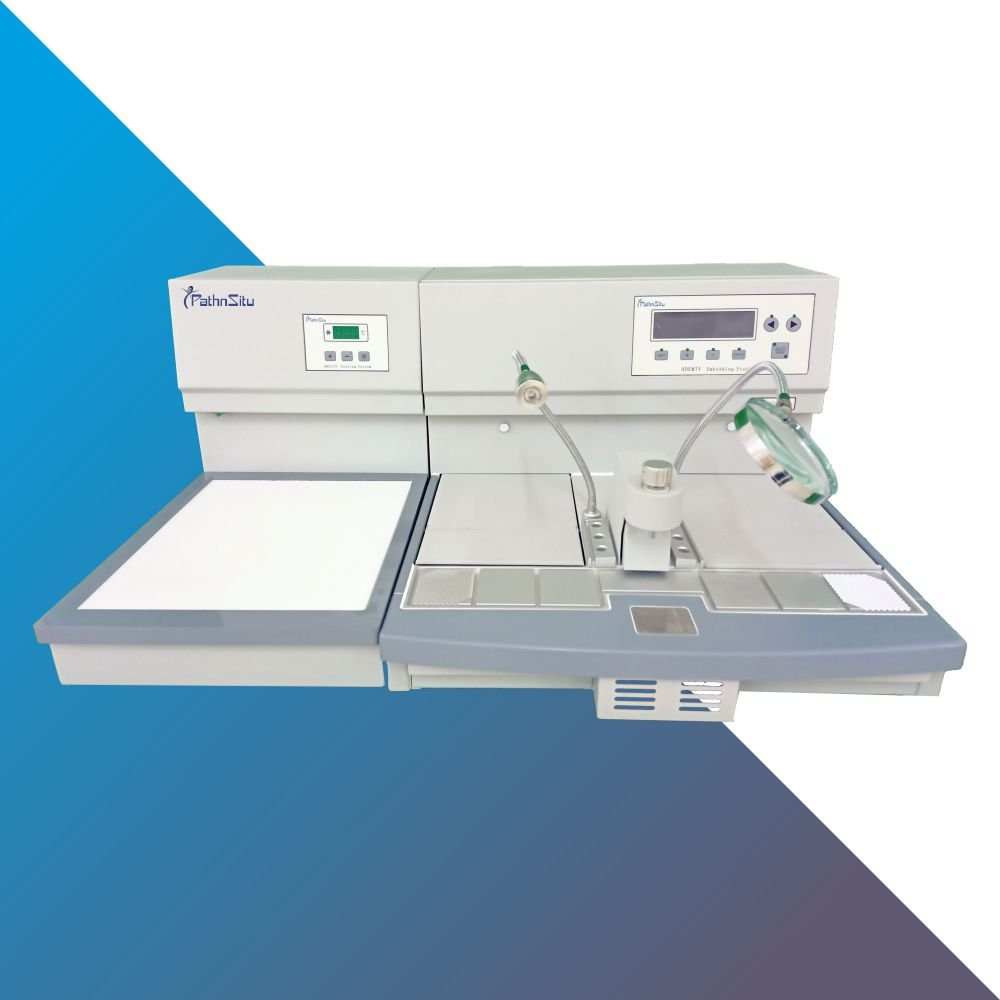
The paraffin embedding is a common technique in any histology lab. It is the standard method to prepare tissue paraffin blocks for section cutting. This procedure is performed using an embedding center in which the tissues are immersed in paraffin wax using molds, it is then cooled to solidify it so that it provides support for tissue section cutting. This Advanced Embedding station comes with flexible LED lamp and adjustable magnifier which makes it user friendly to work with smaller specimen/tissues.
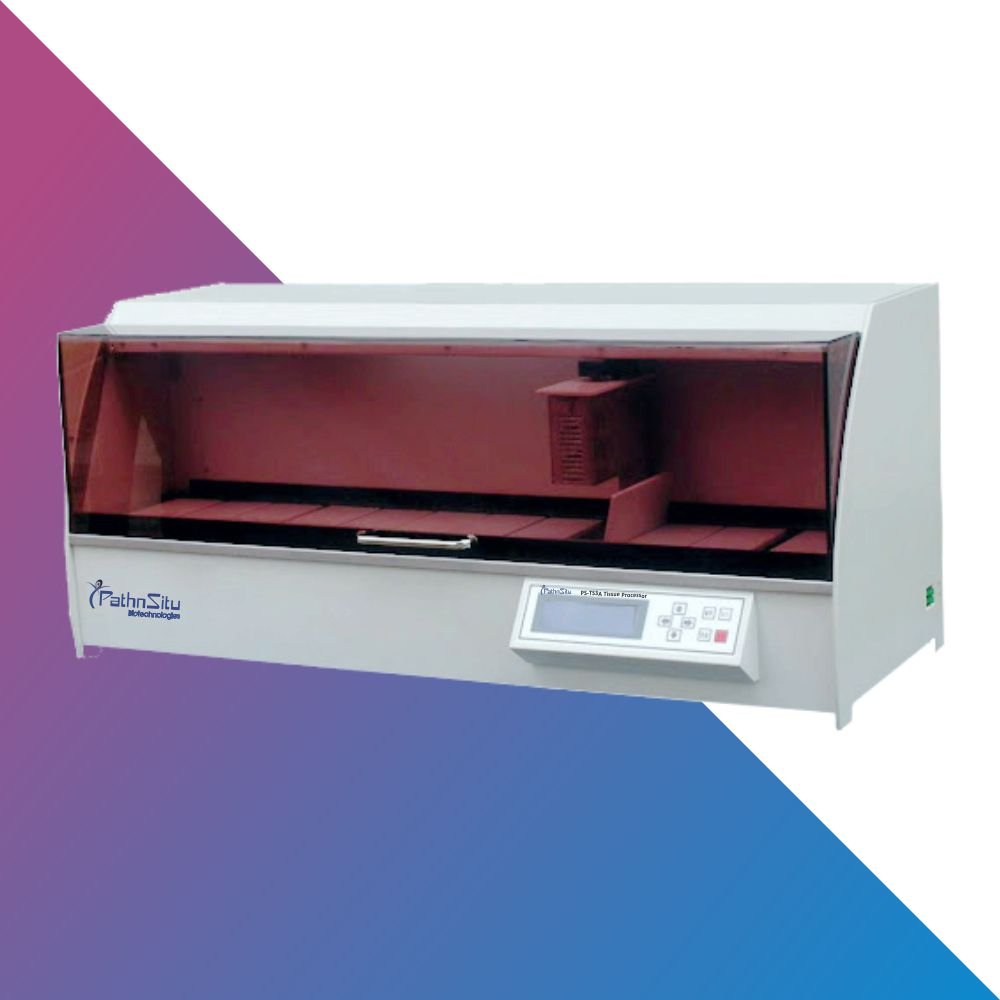
Tissue processing comprises of majorly 3 steps (Dehydration, Clearing & Impregnation) using multiple reagents which is required to take an animal/human tissue from fixation to the state where it is completely infiltrated in an appropriate histological wax and can be readily embedded for section cutting using a microtome.
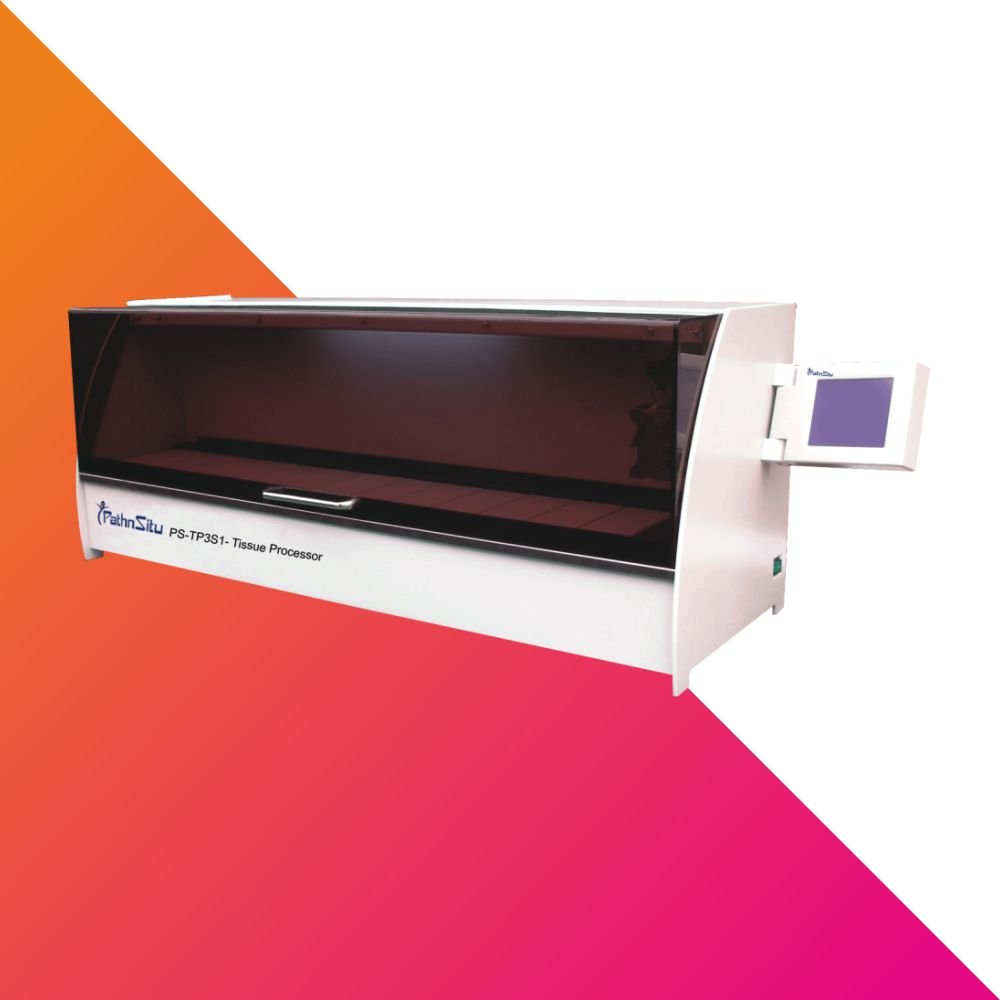
Tissue processing comprises of majorly 3 steps (Dehydration, Clearing & Impregnation) using multiple reagents which is required to take an animal/human tissue from fixation to the state where it is completely infiltrated in an appropriate histological wax and can be readily embedded for section cutting using a microtome.
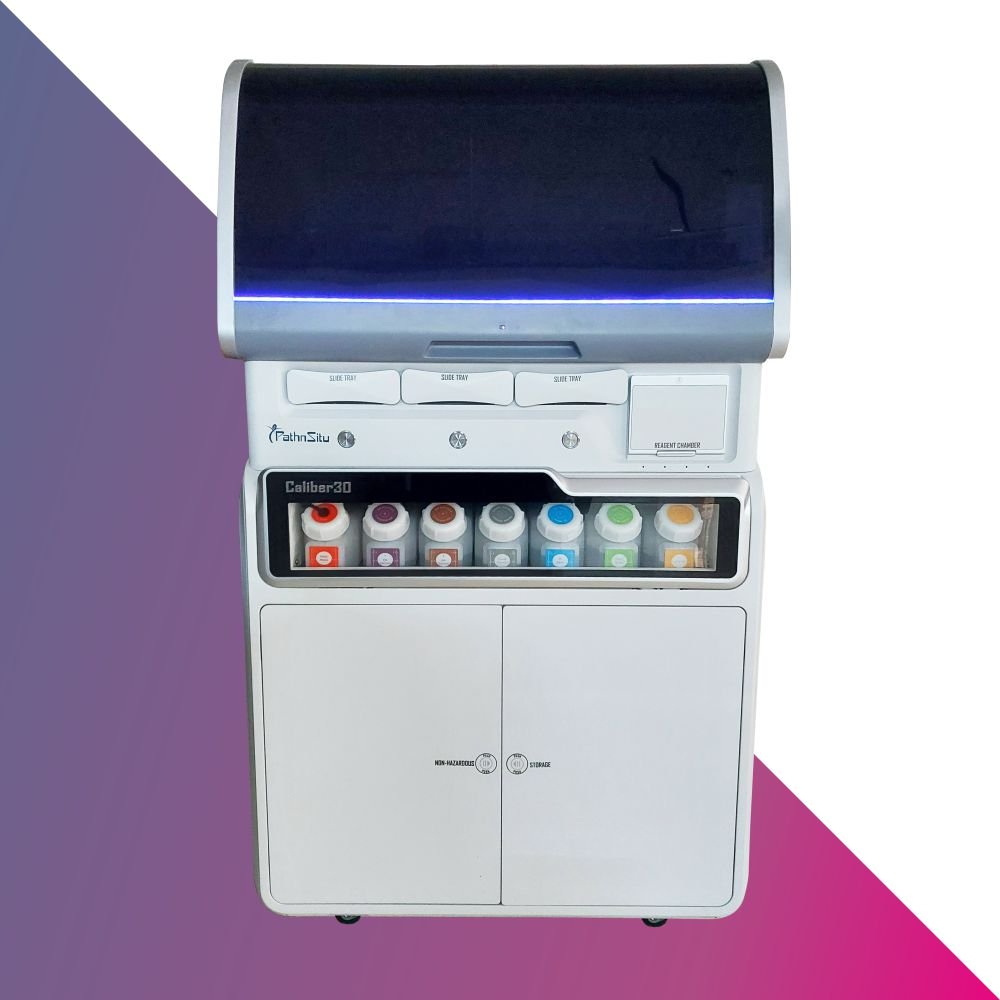
PathnSitu’s Fully Automated Caliber30 offers the user to complete the IHC staining protocol steps for 30 slides in 4 - 4.5 Hours. The use of Cover Shield Technology and Smaller Footprint helps to minimize the consumption of the reagents and occupies less space in the lab. Caliber30 can help the pathologist to meet the TAT for patient reporting offering faster diagnosis. Caliber30 helps to reduce the user occupancy on the instrument giving them more time to work on other laboratory challenging works. Another important feature is that Caliber30 allows users to connect up to 5 instruments using a single computer making it highly competent and efficient. Self-probe cleaning is an important feature of the instrument where the probe automatically cleans itself to avoid cross contamination. Visual LED Alarms benefit the user by alerting them about any errors, reagent refill requirement, improper placement of reagent bottles etc.
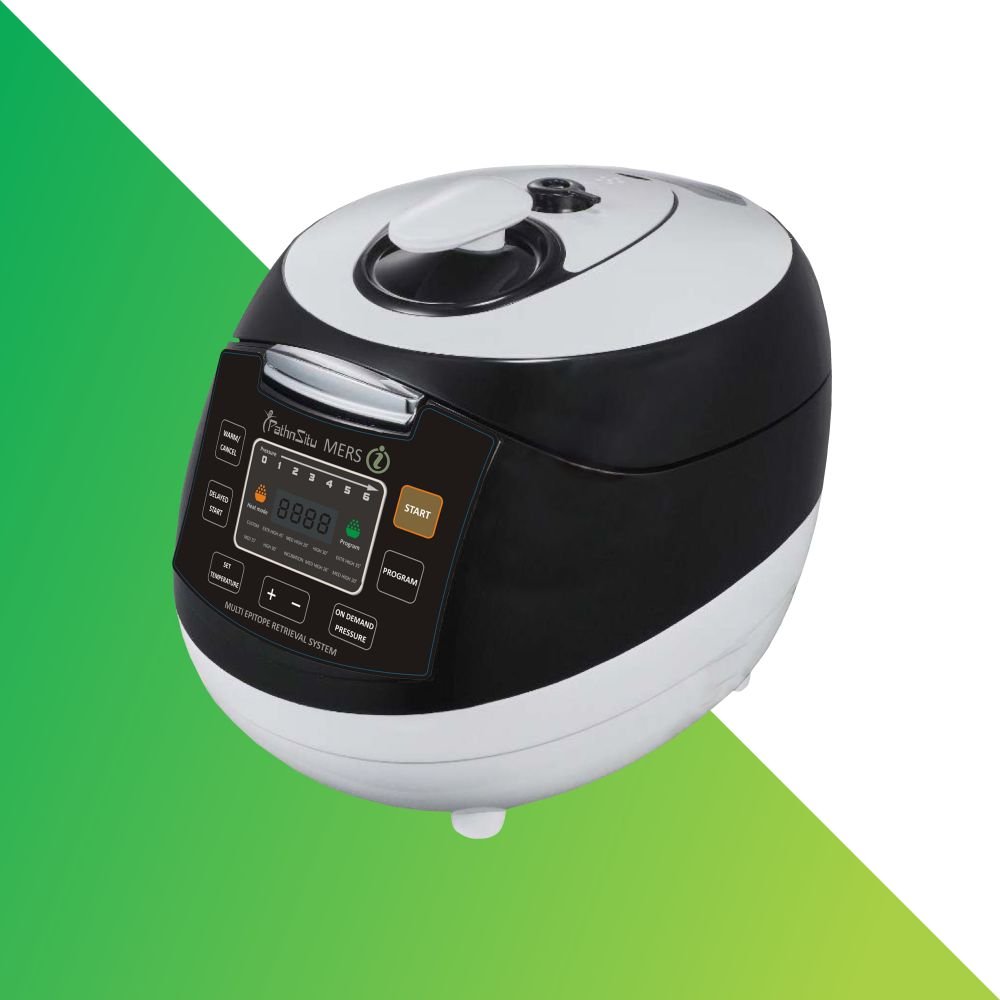
Multi Epitope Retrieval System is designed to perform optimal antigen retrieval triggered by heat under pressure. The customized one touch retrieval programs are validated in house for Immunohistochemistry (IHC). User safety is our top priority and MERSⓘ is designed with double protection technology to ensure safe release of excess pressure. The built-in fully digital default programs in the system makes it a revolutionary walkaway system with unique features like different protocol selection with different pressure conditions, Delayed Start, Digital timer Count down, Temperature display, Set temperatures and Auto resume for short time power cuts. The optimal temperature and pressure speeds up the process and yields to consistent staining.